The Power of Navratri
Posted on
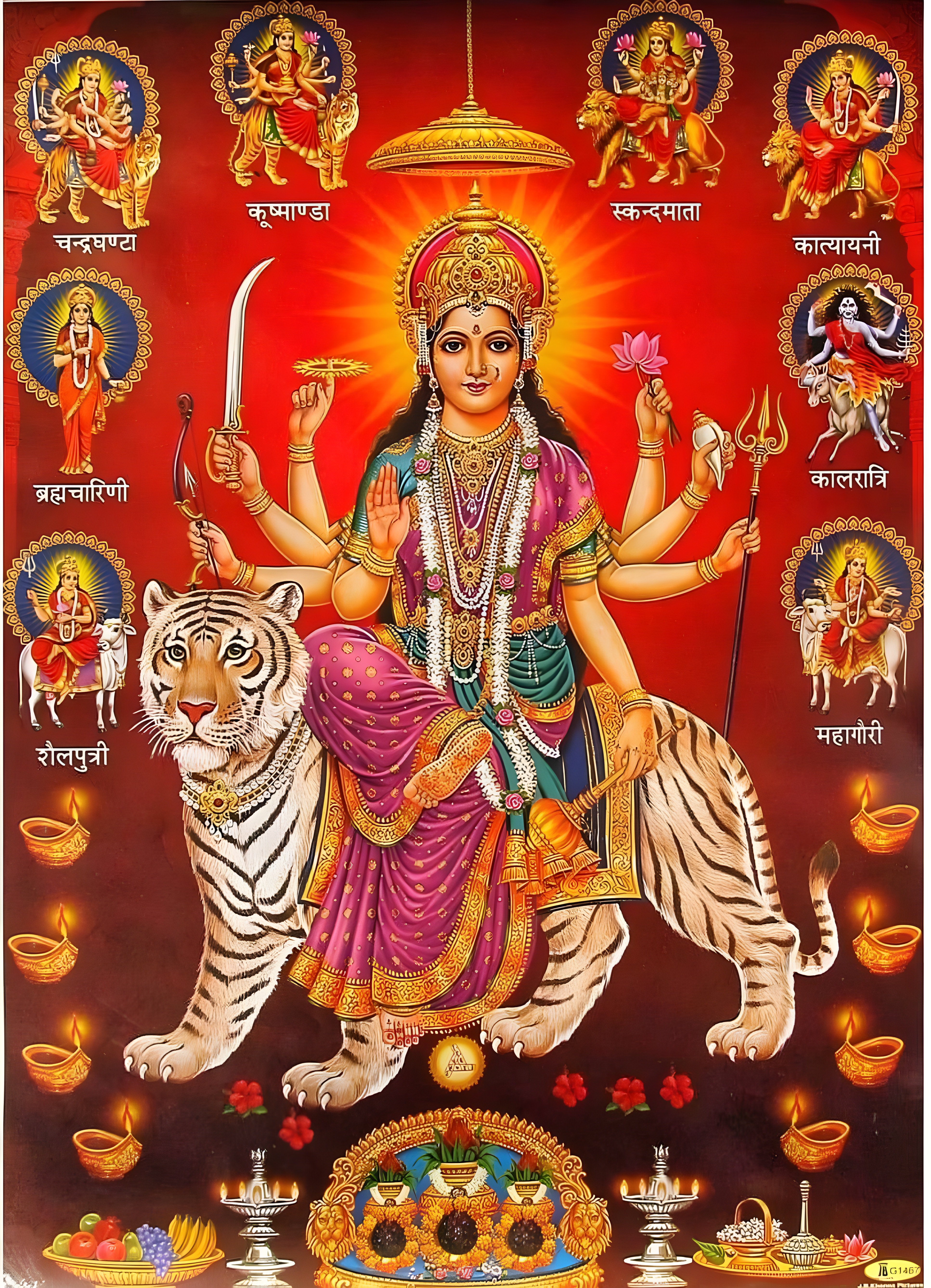
Navratri, meaning "nine nights," is a significant Hindu festival dedicated to the worship of Goddess Durga and her nine forms. It is a time of spiritual renewal, fasting, and devotion, celebrated twice a year, with Sharad Navratri being the most prominent.
The festival commemorates the victory of Goddess Durga over the demon Mahishasura, symbolizing the triumph of good over evil. Each of the nine nights is dedicated to one form of the Goddess, representing different aspects of divine feminine power.
The Nine Forms of Durga
- Shailaputri: The daughter of the mountains, symbolizing strength and purity.
- Brahmacharini: The one who practices penance, representing devotion and austerity.
- Chandraghanta: The one with a moon-like bell, embodying courage and grace.
- Kushmanda: The creator of the universe, signifying energy and vitality.
- Skandamata: The mother of Skanda, representing maternal love and protection.
- Katyayani: The warrior goddess, embodying power and ferocity.
- Kalaratri: The dark night, symbolizing destruction of evil and transformation.
- Mahagauri: The pure and radiant one, representing peace and serenity.
- Siddhidatri: The giver of perfection, signifying spiritual enlightenment.
During Navratri, devotees fast, perform Garba and Dandiya dances, and offer prayers. The festival culminates in Dussehra, celebrating Lord Rama's victory over Ravana. Navratri encourages inner strength, devotion, and the awakening of divine energy within.